Industry News & Blog
Where our team dishes out the juiciest tech and industry scoops

Cross-Border Linguistic Sourcing: Why Distributed Operations Are Essential for Sensitive Language Markets
For languages affected by geopolitical constraints (Russian, Ukrainian, Persian, Hebrew and others), sourcing linguists exclusively from the primary country is no longer always viable. A distributed operational model ensures continuity, quality and risk mitigation.
Read More
Turkish Translation Services: What Global Companies Need to Know Before Entering the Turkish Market
Türkiye is Europe's youngest and fastest-growing consumer market with 85 million people. But entering it successfully requires far more than word-for-word translation. Here's the definitive operational guide.
Read More
Game Localization for MENA and Turkic Markets: A Developer's Handbook
With 400+ million gamers across the MENA region and Turkic-speaking countries, localization quality directly impacts revenue. A technical and cultural guide for game developers targeting these high-growth markets.
Read More
Arabic Translation and Localization: Navigating Dialects, RTL and Cultural Adaptation Across 22 Countries
Arabic is spoken across 22 countries with enormous dialectal variation. Choosing the wrong dialect or ignoring RTL implementation details can undermine your entire market entry. A comprehensive guide.
Read More
Azerbaijani Translation Services: Bridging Türkiye, the Caucasus and Central Asian Markets
Azerbaijan's strategic position between Türkiye, Iran, Russia and Central Asia makes it a gateway market. But Azerbaijani localization has unique requirements that most LSPs overlook.
Read More
AI Data Annotation for Turkish and Arabic: Why Quality Training Data Is the New Gold Standard
As AI models expand into Turkish, Arabic and Turkic languages, the demand for high-quality annotated training data has exploded. Here's what makes linguistic annotation for these languages uniquely challenging, and why LSPs are perfectly positioned to deliver it.
Read More
Kurdish Translation Services: Navigating Sorani, Kurmanji and a Fragmented Linguistic Landscape
Kurdish is spoken by 30-40 million people across multiple countries and in two major scripts. Most translation providers treat it as one language: that's a fundamental mistake.
Read More
Persian (Farsi) Translation Services: Reaching 110 Million Speakers Across Iran, Afghanistan and Tajikistan
Persian is a gateway to three distinct markets with shared linguistic roots but divergent cultural and regulatory landscapes. Effective localization requires understanding Farsi, Dari and Tajik as related but separate targets.
Read More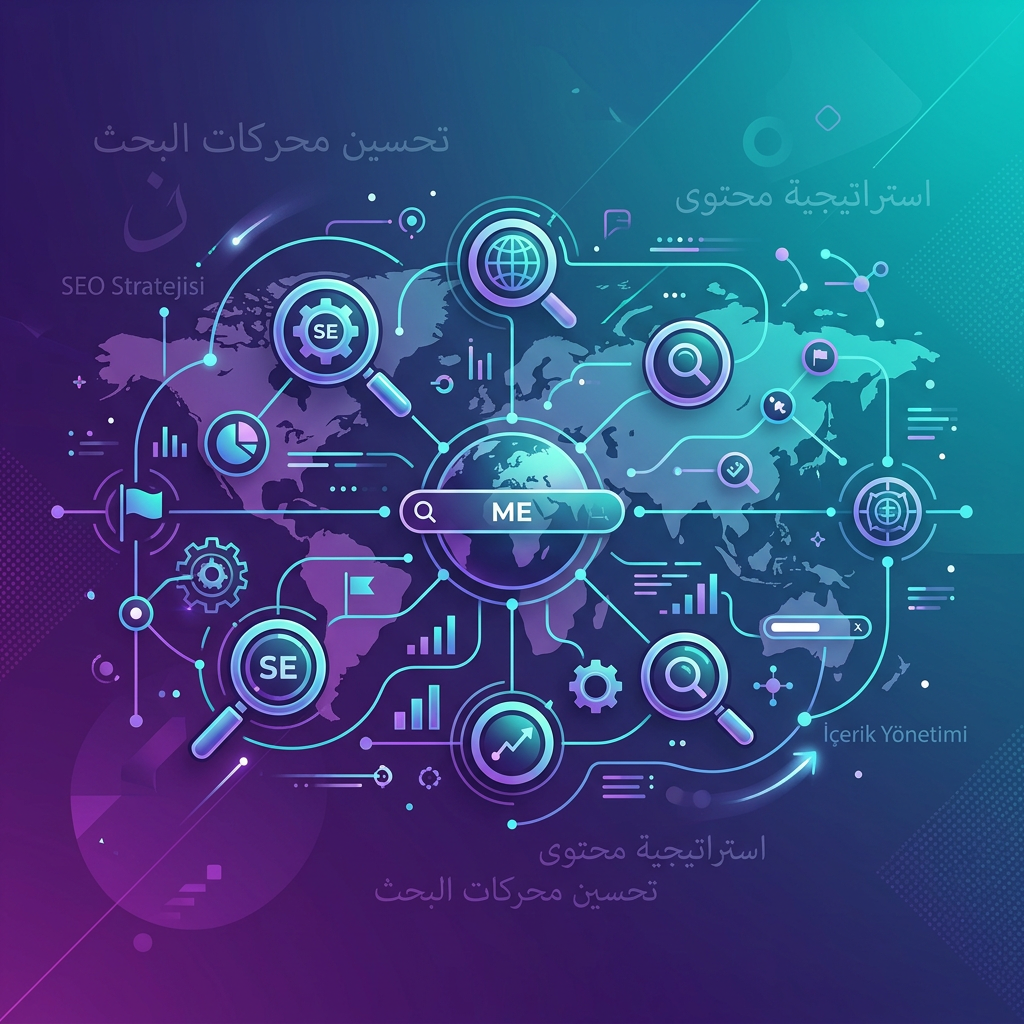
Multilingual SEO Strategy for the Middle East: A Practitioner's Playbook
Ranking in Arabic, Turkish and Persian search results requires a fundamentally different approach to SEO. Here's the technical and linguistic playbook we use for clients expanding into Middle Eastern digital markets.
Read More
Serbian, Croatian and Bosnian Translation: Understanding the BCS Language Cluster
Serbian, Croatian and Bosnian are linguistically very close but politically and culturally distinct. Treating them as one language alienates all three audiences. Here's how to navigate the BCS cluster effectively.
Read MoreAlbanian Translation Services: A Unique Indo-European Language at the Heart of the Balkans
Albanian stands alone in its branch of the Indo-European language family. With speakers across Albania, Kosovo, North Macedonia and a global diaspora, it requires specialized linguistic expertise.
Read More
The Complete Guide to E-Commerce Localization for the Turkish Market
Türkiye's e-commerce market hit $35 billion in 2025. But entering this market requires more than translation: it demands deep cultural adaptation of your entire buyer journey.
Read MoreBulgarian and Macedonian Translation: Navigating Two Distinct Standards in South-Eastern Europe
Bulgarian and Macedonian are closely related South Slavic languages written in Cyrillic. Each has distinct national standards, and conflating them is both a linguistic error and a cultural offence.
Read More
Greek Translation Services: Bridging Ancient Heritage and Modern Digital Markets
Greek's unique script, complex grammar and rich cultural context make it a specialist language for localization. With 13 million speakers and EU membership, Greece is a distinct market requiring dedicated expertise.
Read More
Quality Assurance in Translation: Moving Beyond Basic Proofreading
A comprehensive look at modern translation QA: from automated checks and MQM frameworks to human review protocols that ensure every deliverable meets professional standards.
Read More
Romanian Translation Services: The Romance Language at the Crossroads of Eastern Europe
Romanian is the largest Romance language in Eastern Europe with 24 million speakers. Its Latin roots set it apart from neighbouring Slavic languages, creating unique localization requirements.
Read More
Russian and Ukrainian Translation: Navigating Two Major Eastern European Languages in a Changing Landscape
Russian and Ukrainian are two of Eastern Europe's largest languages with combined speaker populations exceeding 300 million. Effective localization requires understanding their distinct identities and the operational realities of distributed sourcing.
Read More
Kazakh and Uzbek Translation Services: Central Asia's Emerging Digital Markets
Kazakhstan and Uzbekistan represent 50 million people and rapidly digitalizing economies. Both are transitioning to Latin script, creating a unique moment for forward-thinking localization strategies.
Read More
Squid Game Translation: From Missteps to Mastery
Squid Game translation team for Season 2 earned a round of applause from Korean speakers for its polished subtitles and dubbing.
Read More
English and Turkish: Grammar Showdown
Turkish resembles a Lego tower, where verbs are stacked with suffixes to indicate tense, person and even mood.
Read More
12 English Words You Didn't Know Came From Turkish
From your morning yoghurt to the kiosk on the corner, Turkish has quietly infiltrated the English language for centuries. A linguist's guide to the Ottoman loanwords hiding in plain sight.
Read More
Santa's Names in 15 Languages: A Holiday Localization Guide
Did you know Santa Claus is historically from southern Türkiye? From Père Noël to Ded Moroz, the cultural adaptation of Santa's identity is a masterclass in transcreation.
Read More
A Day in the Life of a Localization Project Manager
What does it actually take to orchestrate a 15-language simultaneous release? Cemre walks through a real day managing localization projects, from morning stand-ups to midnight hotfixes.
Read More
Artificial Intelligence and the LSP Industry: A Strategic Roadmap for 2025
The language services industry is at an inflection point. AI-driven tools are reshaping workflows, redefining quality benchmarks and creating new revenue streams for LSPs that adapt strategically.
Read More
Why Google Translate Falls Short (And What Professional Localization Actually Looks Like)
Google Translate handles 143 billion words daily. But when your brand reputation, legal compliance or user experience is on the line, here's why professional localization is a fundamentally different discipline.
Read More
Demystifying Hallucinations in Large Language Models: What LSPs Need to Know
When an LLM confidently generates plausible but fabricated translations, the consequences range from embarrassing to dangerous. A practical guide for language professionals navigating the era of generative AI.
Read More
30 Trados Studio Shortcuts That Will Transform Your Translation Speed
Professional translators live inside their CAT tools. Here are the keyboard shortcuts our senior linguists swear by: the ones that separate a 2,000-word day from a 4,000-word day.
Read More
Translation Management Systems: A Practical Guide for Growing Teams
TMS platforms are the operational backbone of modern localization. We compare the leading systems and share hard-won lessons from implementing them across multilingual projects.
Read More
Google Gemini vs. ChatGPT: What Language Professionals Should Actually Care About
Beyond the benchmark wars, we examine what Google's Gemini and OpenAI's GPT models actually mean for translation, localization and AI data services, with real-world testing across Turkish and Arabic.
Read More
Inside Google PaLM: How Large Language Models Handle Translation
We unpack how Google's Pathways Language Model processes multilingual tasks, why it matters for Turkish and Arabic language pairs and what it reveals about the future of machine translation.
Read MoreNever Miss an Insight
Get the latest industry news, translation tips, and language insights delivered to your inbox.