Cross-Border Linguistic Sourcing: Why Distributed Operations Are Essential for Sensitive Language Markets
The language services industry has traditionally operated on a simple model: need Russian translation? Hire translators in Russia. Need Persian? Source from Iran. Need Hebrew? Work with linguists in Israel.
This model worked well for decades. But the geopolitical landscape of the 2020s has introduced new complexities that make exclusive in-country sourcing risky, and sometimes impractical, for several major languages.
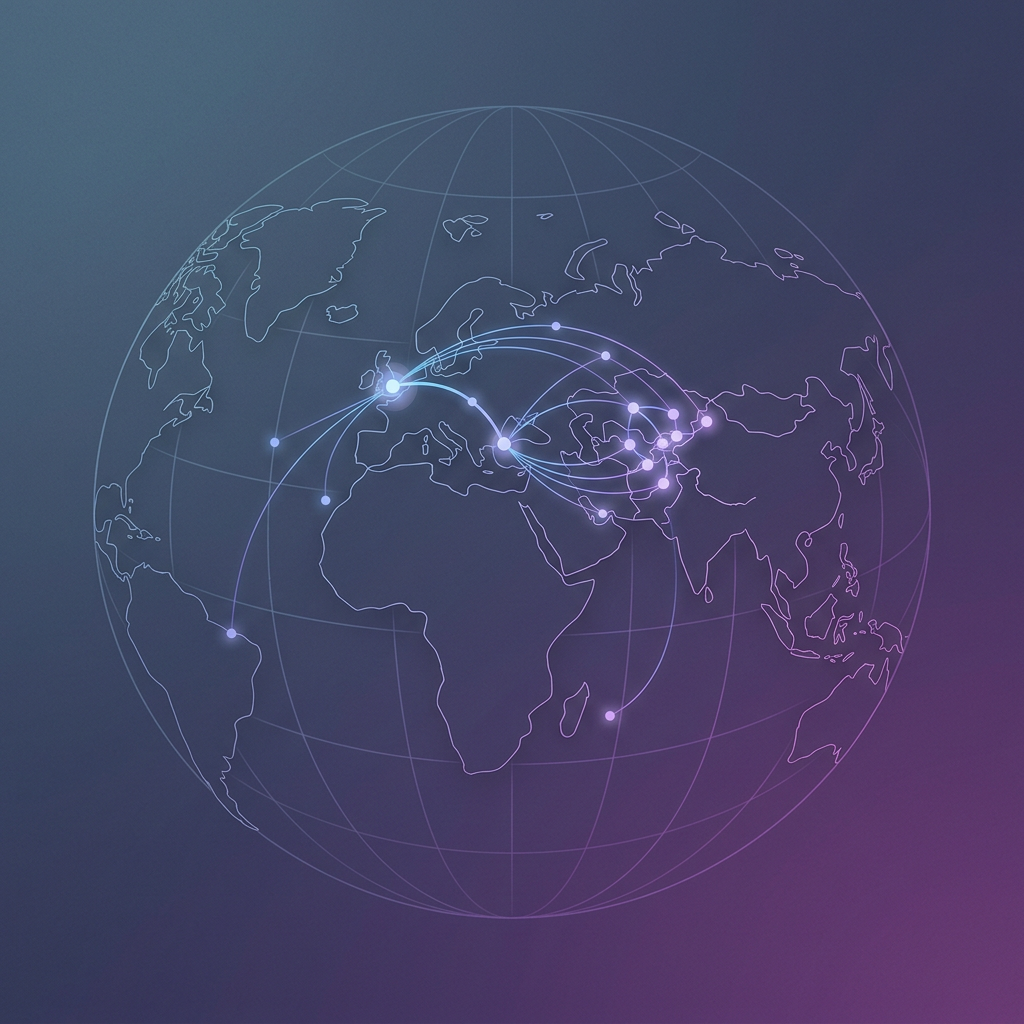
This article examines why distributed linguistic sourcing (building translator networks across multiple countries and jurisdictions) has become an operational necessity, and how companies like El Turco are structured to provide continuity in these markets.
The Case for Distributed Sourcing
Operational Continuity
When a language services provider relies entirely on linguists in a single country, any disruption to that country's connectivity, banking system or business environment creates a single point of failure. Political tensions, sanctions, infrastructure disruptions or regulatory changes can suddenly make it impossible to work with previously reliable partners.
Distributed sourcing (maintaining qualified linguist networks across multiple jurisdictions for the same language) eliminates this risk.
Sanctions and Compliance
International sanctions regimes create complex compliance requirements for language services providers. Paying linguists in certain jurisdictions may be restricted or require specific licenses. Companies with clients in the US, EU or UK must navigate these requirements carefully.
A distributed model, with linguists available in multiple countries, allows providers to route work through compliant jurisdictions without interrupting service delivery.
Quality Through Diversity
Distributed sourcing isn't just risk mitigation: it can improve quality. Diaspora linguists often have unique perspectives:
- Bilingual cultural understanding: A Russian-speaking linguist based in Türkiye or Germany understands both the source language culture and the international audience's expectations
- Updated market knowledge: Diaspora communities maintain connections to their language while also understanding global commercial standards
- Specialized expertise: Academic and professional diaspora communities include subject matter experts in technology, medicine, law and finance
Languages Where Distributed Sourcing Matters Most
Russian
Russian is spoken by approximately 250 million people across Russia, Central Asia, the Baltics and significant diaspora communities worldwide. The demand for Russian translation (particularly in technology, gaming, e-commerce and legal sectors) remains high.
Distributed sourcing locations for Russian include:
- Central Asia (Kazakhstan, Uzbekistan, Kyrgyzstan): large Russian-speaking populations with strong bilingual capabilities
- The Baltics (Latvia, Lithuania, Estonia): established Russian-speaking communities with EU-based operations
- Türkiye: growing community of Russian-speaking professionals, particularly in Istanbul and Antalya
- Western Europe (Germany, UK, France): professional diaspora with specialized expertise
- Israel: substantial Russian-speaking population with high education levels
Ukrainian
Ukrainian translation demand has increased significantly since 2022, both for humanitarian content and as Ukrainian markets develop independent digital ecosystems. Distributed sourcing is essential given ongoing circumstances.
Key sourcing locations include:
- Western Ukraine (where connectivity and stability are stronger)
- Poland: hosting a large Ukrainian community with professional-grade linguists
- Germany and Czech Republic: significant diaspora populations
- Türkiye: Ukrainian-speaking community presence
Persian (Farsi)
Persian is spoken by approximately 110 million people across Iran, Afghanistan (as Dari) and Tajikistan (as Tajik). Working with linguists in Iran directly presents compliance challenges for many Western clients.
Distributed sourcing options:
- Türkiye: a significant Persian-speaking community, particularly in Istanbul, with many professionals who maintain native-level fluency
- UAE and other Gulf states: Iranian business diaspora
- Germany and UK: established Persian-speaking professional communities
- Afghanistan and Tajikistan: for Dari and Tajik varieties specifically
Hebrew
Hebrew translation is in consistent demand for technology, legal and financial content. While Israel is the primary source, distributed sourcing provides operational flexibility.
Additional sourcing locations:
- US and UK: large Hebrew-speaking communities with professional expertise
- Continental Europe: smaller but qualified Hebrew-speaking professional networks
Türkiye as a Linguistic Hub
Türkiye's geographic position, cultural diversity and open immigration policies have made it a natural hub for multilingual talent:
- Russian speakers: A growing community of Russian-speaking professionals, many with technology and business backgrounds
- Ukrainian speakers: Present particularly in Istanbul and coastal cities
- Persian speakers: A historically established community with deep commercial ties
- Arabic speakers: Syrian, Iraqi and other Arabic-speaking communities representing multiple dialects
- Central Asian languages: Turkic language speakers from Kazakhstan, Uzbekistan and other Central Asian countries
This concentration of multilingual talent in a single, well-connected jurisdiction creates unique advantages for language services operations. Linguists can be vetted, trained and managed with relative ease, and Türkiye's business environment supports commercial relationships with both Western and Eastern clients.
The UK Headquarters Advantage
For El Turco, our UK headquarters in London provides an additional layer of operational stability:
- Jurisdictional clarity: UK-based commercial relationships are well-understood by international clients
- Banking and payments: UK banking infrastructure supports payments to linguists across virtually all jurisdictions
- Contractual frameworks: English law contracts are accepted globally
- Client confidence: UK registration provides assurance for enterprise clients with strict vendor compliance requirements
The combination of UK headquarters with Istanbul operational base creates a dual-jurisdiction structure that maximises both linguistic access and commercial stability.
Quality Assurance in Distributed Models
Distributed sourcing requires robust quality controls:
Linguist Vetting
Every linguist, regardless of location, undergoes the same testing, evaluation and onboarding process. Native-level fluency in the target language is non-negotiable, regardless of where the linguist is based.
Terminology Consistency
Centralised glossary management ensures that linguists across different countries produce consistent translations. This is particularly important when multiple linguists work on the same project.
Cultural Accuracy
Distributed teams may have varying cultural reference points. Regular calibration sessions, style guides and reviewer oversight ensure that translations reflect the intended cultural context, whether that's Russia-specific, diaspora-oriented or internationally neutral.
Practical Implications for Buyers
If you're procuring translation services for languages affected by geopolitical complexity:
- Ask about sourcing diversity: Does your provider rely on a single country for linguists, or do they have distributed networks?
- Verify compliance: Ensure your provider understands and complies with relevant sanctions requirements
- Test continuity plans: What happens if a primary sourcing location becomes unavailable?
- Consider quality implications: Distributed sourcing done well improves quality through diverse perspectives; done poorly, it introduces inconsistency. Ask about QA processes.
El Turco's Distributed Approach
Our operational structure was designed for this reality. With management in London, operations in Istanbul and linguist networks spanning Central Asia, the Balkans, the Middle East and European diaspora communities, we provide:
- Uninterrupted service delivery for Russian, Ukrainian, Persian, Hebrew and other sensitive-market languages
- Full sanctions compliance through our UK entity and vetted payment processes
- Consistent quality through centralised QA regardless of linguist location
- Rapid scaling by accessing multiple talent pools for the same language
The language services industry must evolve beyond the assumption that linguists for a given language can only be sourced from one country. At El Turco, distributed operations aren't a workaround: they're our core operational model.
Cansun is a Localization Specialist at El Turco, managing cross-border linguistic operations and multilingual strategy for clients requiring sensitive-market language coverage.