Santa's Names in 15 Languages: A Holiday Localization Guide
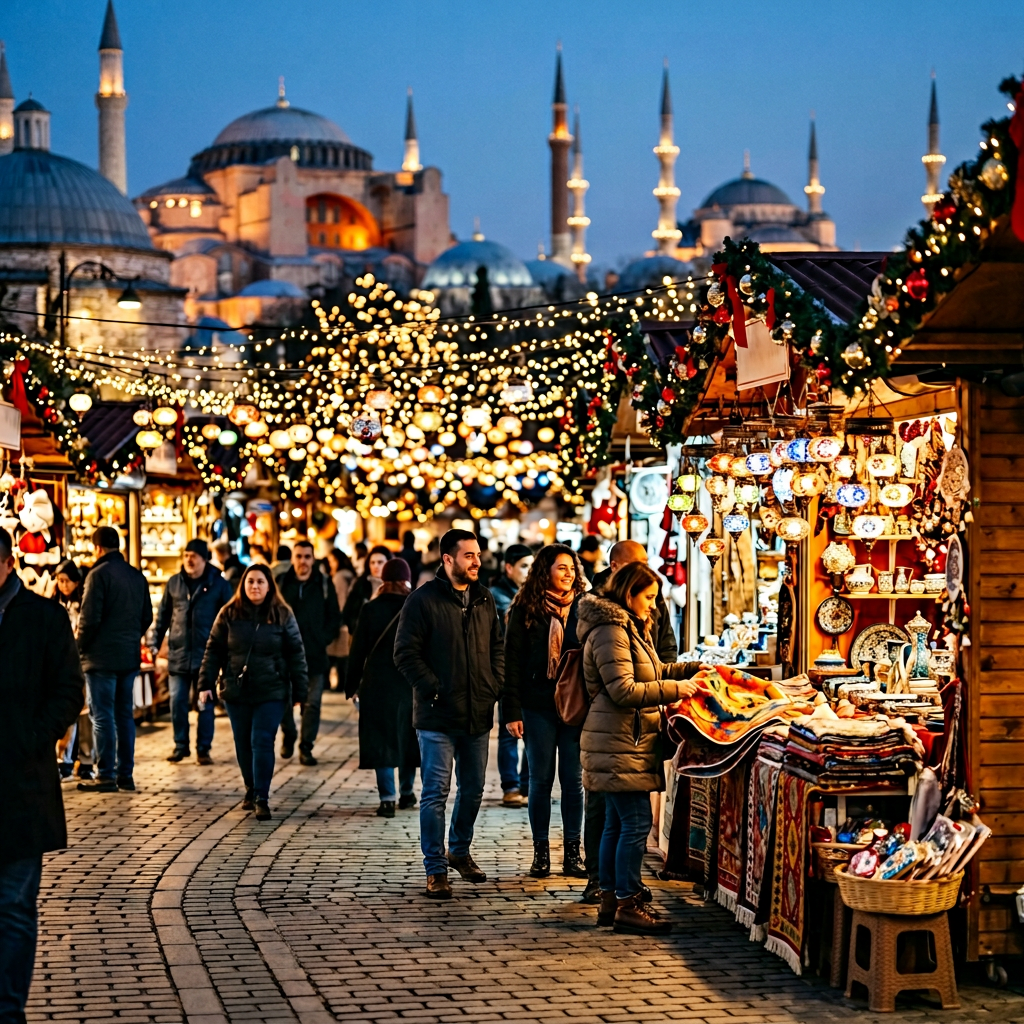
Here's a fact that surprises most people: the historical Saint Nicholas was born in Patara and served as Bishop of Myra, both located in what is now Antalya Province, southern Türkiye. The world's most beloved winter figure has Turkish roots.
As localization professionals, we find the global evolution of Santa Claus fascinating. The same cultural figure has been adapted, renamed and reimagined across dozens of cultures, making it one of the most successful "transcreation" stories in human history.
The Names and Their Stories
1. English: Santa Claus
Derived from the Dutch "Sinterklaas" (itself a contracted form of "Sint Nikolaas"). Dutch settlers brought the tradition to New Amsterdam (now New York), and the Americanised version eventually conquered the world through Coca-Cola's 1930s marketing campaigns, arguably the most successful brand localization in history.
2. Turkish: Noel Baba
Literally "Father Christmas" (Noel from the French, Baba meaning father). Despite Saint Nicholas's Turkish origins, the modern gift-giving tradition in Türkiye is relatively recent, introduced during Atatürk's secularisation reforms. Celebrations centre on New Year's Eve rather than December 25th, a critical cultural distinction for any brand localizing holiday content for the Turkish market.
3. Russian: Ded Moroz (Дед Мороз)
"Grandfather Frost", not derived from Saint Nicholas at all, but from Slavic winter mythology. Ded Moroz delivers gifts on New Year's Eve (a tradition that persisted through the Soviet era's suppression of religious celebrations) and is accompanied by his granddaughter Snegurochka (Snow Maiden). This companion figure has no equivalent in Western traditions.
4. French: Père Noël
"Father Christmas": the French tradition maintains the religious connection (Noël from Latin "natalis") while creating a figure distinct from the Anglo-American Santa Claus. Père Noël is typically depicted as taller and thinner than his American counterpart.
5. German: Weihnachtsmann / Nikolaus
Germany has two figures: the Weihnachtsmann (Christmas Man) who arrives on December 25th, and Sankt Nikolaus, who visits on December 6th to fill children's shoes with treats. A localization professional targeting the German market needs to know which figure is appropriate for the campaign timing.
6. Arabic: بابا نويل (Baba Noel)
Used primarily in Christian communities across Lebanon, Syria, Egypt and Jordan. The name follows the same "Father Christmas" pattern. In the Gulf states, the figure is less culturally prevalent but increasingly recognised in commercial contexts.
7. Persian: بابانوئل (Bābā No'el)
Similar to Arabic, with French influence evident in the "Noël" element. Iran's Armenian and Assyrian Christian communities maintain gift-giving traditions, while the broader culture celebrates Yaldā Night (the winter solstice) as the major December holiday.
8. Dutch: Sinterklaas
The original "Santa Claus." Sinterklaas arrives by steamship from Spain on November 15th and delivers gifts on December 5th (Pakjesavond). The Dutch tradition is so distinct from the American version that localizing "Santa Claus" content for the Netherlands requires fundamental adaptation, not just translation.
9. Italian: Babbo Natale
"Daddy Christmas": the informal "Babbo" (versus the standard "Papà") gives the Italian version a warmth and familiarity that reflects the culture's relationship with family and celebration.
10. Spanish: Papá Noel / Reyes Magos
Spanish-speaking countries split between Papá Noel (who visits on December 25th) and Los Reyes Magos (the Three Wise Kings, who bring gifts on January 6th). In Spain, the Reyes Magos tradition is dominant. In Latin America, both figures coexist in varying proportions by country.
11. Japanese: サンタクロース (Santa Kurōsu)
A direct phonetic adaptation. Christmas in Japan is culturally fascinating: it's not a national holiday or religious celebration, but a commercial and romantic occasion. KFC's Christmas dinner tradition ("Kurisumasu ni wa Kentakkii") is the world's most successful example of cultural recontextualization.
12. Greek: Άγιος Βασίλης (Agios Vasilis)
Greece doesn't celebrate Saint Nicholas as the gift-bringer. Instead, Agios Vasilis (Saint Basil) delivers gifts on January 1st. This is a critical distinction for brands running "Santa" campaigns in the Greek market.
13. Icelandic: Jólasveinar
Iceland has not one Santa but thirteen Yule Lads (Jólasveinar), mischievous troll-like figures who each visit on successive nights before Christmas. Their names translate to things like "Spoon Licker," "Door Slammer" and "Sausage Swiper." Try localizing that into a standard Christmas campaign.
14. Brazilian Portuguese: Papai Noel
The Brazilian adaptation closely follows the French tradition but adds local cultural flavour. In tropical December weather, Brazilian depictions sometimes show Papai Noel in lighter clothing or arriving by helicopter instead of sleigh.
15. Azerbaijani: Şaxta Baba
"Frost Grandfather", following the Russian Ded Moroz tradition due to Soviet-era cultural influence, but with distinctive Azerbaijani elements. As Azerbaijan asserts its independent cultural identity, the figure's presentation is evolving.
Localization Lessons From Santa
The Santa Claus phenomenon teaches us several principles that apply to any transcreation project:
Cultural adaptation isn't optional. You can't export the American Santa Claus to the Netherlands, Japan or Iceland without fundamental changes. The same principle applies to any brand entering a new market.
Timing matters as much as content. A Christmas campaign timed for December 25th misses the mark in Russia (New Year's Eve), Spain (January 6th) and Greece (January 1st). Holiday localization requires calendar awareness, not just linguistic translation.
Visual adaptation is crucial. Santa's appearance, transportation, companion characters and setting all vary by market. A sleigh and reindeer resonate in Scandinavia; they're meaningless in Brazil or Japan.
Local alternatives can be more effective than adaptation. Sometimes, the right strategy isn't to localize Santa but to leverage existing local traditions instead.
Melis is a Senior Turkish Linguist at El Turco who finds endless joy in the cultural variations of holiday traditions. This article is dedicated to Saint Nicholas of Myra, Türkiye's most famous global export.